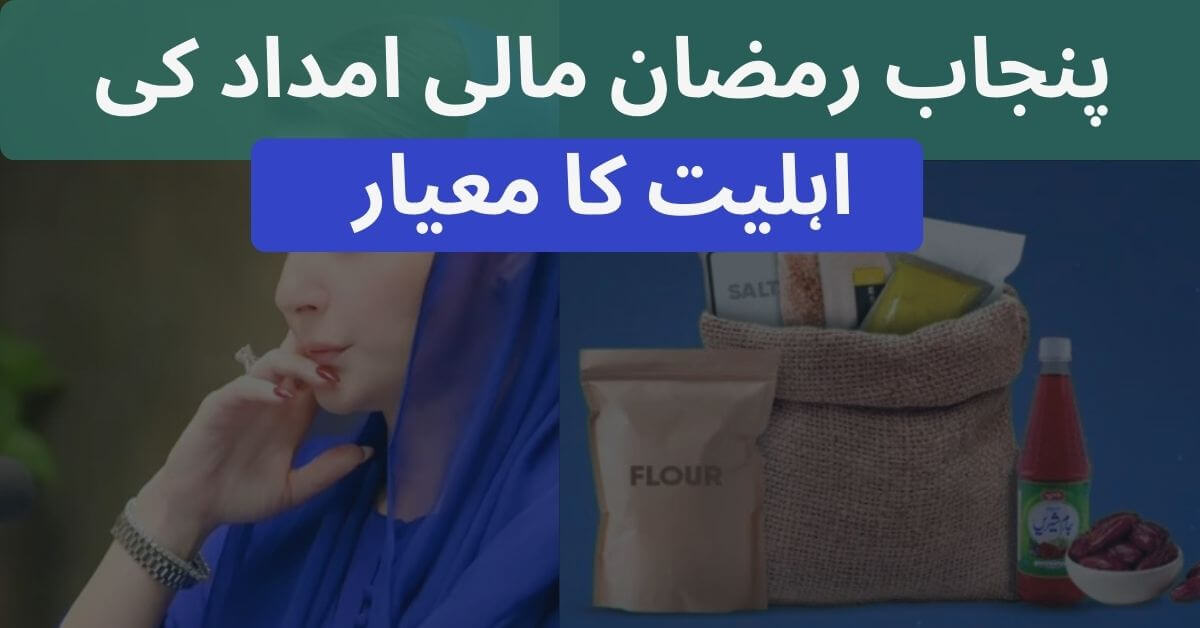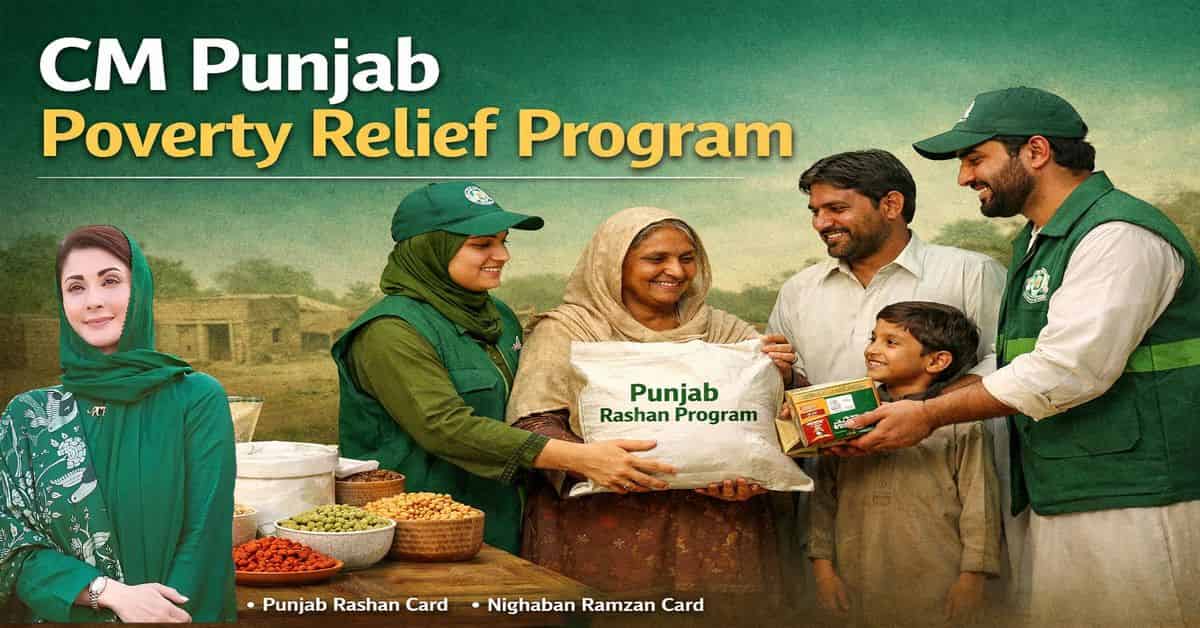
In 2026, the CM Punjab Poverty Relief Program framework will provide short-term support for immediate requirements and longer-term assistance to low-income households. These programs are a component of the provincial government’s strategy to alleviate financial tension, enhance food security, and provide assistance to vulnerable populations.
Every initiative has its own eligibility criteria and benefit structures This guide delineates the primary programs, the criteria for eligibility, and the application process.
Nigehban Ramadan Support Package:
The Nigehban Ramadan program offers targeted assistance to families experiencing economic hardship during the month of fasting.
Benefits
- A single financial grant of Rs. 10,000
- Basic staples, including flour, sugar, ghee, and pulses, are included in a food ration kit.
- Bank of Punjab issues an ATM card to beneficiaries to facilitate secure access to funds.
Important Update for 2026
Registration for this cycle concludes on February 15, 2026. In order to qualify for the benefits, applicants must guarantee that their registration is finalized prior to the deadline.
Punjab Rashan Card (Monthly Grocery Subsidy):
The Punjab Rashan Card is intended to provide continuous food assistance to families, thereby facilitating the management of their regular retail expenses.
Benefits
- Rs. 3,000 monthly subsidy that can be used for essential grocery purchases
Who Can Apply
- Households earning less than Rs. 50,000 per month
- Priority is given to families already registered with national programs like BISP or Ehsaas
The subsidy is redeemable at approved “Parchi” shops and Utility Stores where the Rashan Card is accepted.
Proposed Monthly Relief of Rs. 45,000:
A proposed relief program that offers Rs. 45,000 per month to extremely impoverished households has been the subject of media attention. This is still a proposal and has not been officially launched as of 2026.
Key Points Under Discussion
- The program is designed to assist the “ultra-poor,” who are generally referred to as the bottom 5 percent of the poverty index.
- Cash stipends, interest-free loans, and income-generating assets (such as livestock or small business support) are among the features that have been proposed.
Likely Eligibility Criteria
- Families with a Poverty Measurement Tool (PMT) score of 12 or below would qualify once the program is officially activated
The official eligibility criteria and rollout dates are still pending confirmation, as the initiative is currently under discussion.
Eligibility Guidelines for CM Punjab Poverty Relief Program:
A set of criteria that are based on socio-economic verification is typically required for applicants to be eligible for Punjab’s poverty relief programs.
Basic Requirements
- Valid Punjab domicile
- CNIC (Computerized National Identity Card)
- Registration in the Punjab Socio‑Economic Registry (PSER)
- Household income thresholds that vary by program (for example, under Rs. 50,000 for the Rashan Card)
Additional Conditions
- Luxury items, such as high-value vehicles or substantial land possessions, should not be owned by applicants, as they may influence the eligibility assessment.
- Specific programs may have supplementary criteria that are based on the composition of the family or the level of vulnerability.
Documents Usually Required
- Original CNIC
- Children’s B‑Form where applicable
- A mobile phone with SIM registered on the applicant’s CNIC, for SMS‑based communication
How to Apply for CM Punjab Poverty Relief Program?
Here is a general step‑by‑step overview of the application process:
Step 1: Verify Your PSER Record
Enter your CNIC on the PSER platform to verify your status in the Punjab Socio-Economic Registry. This verifies the completion of the residential survey data.
Step 2: Complete a Household Survey (if Needed)
If the registry does not contain your information or if it is insufficient, you may visit the nearest Union Council office or a designated facilitation center to complete the survey.
Step 3: Wait for Verification
Once your registration is verified, you will receive notification messages confirming your eligibility for specific programs:
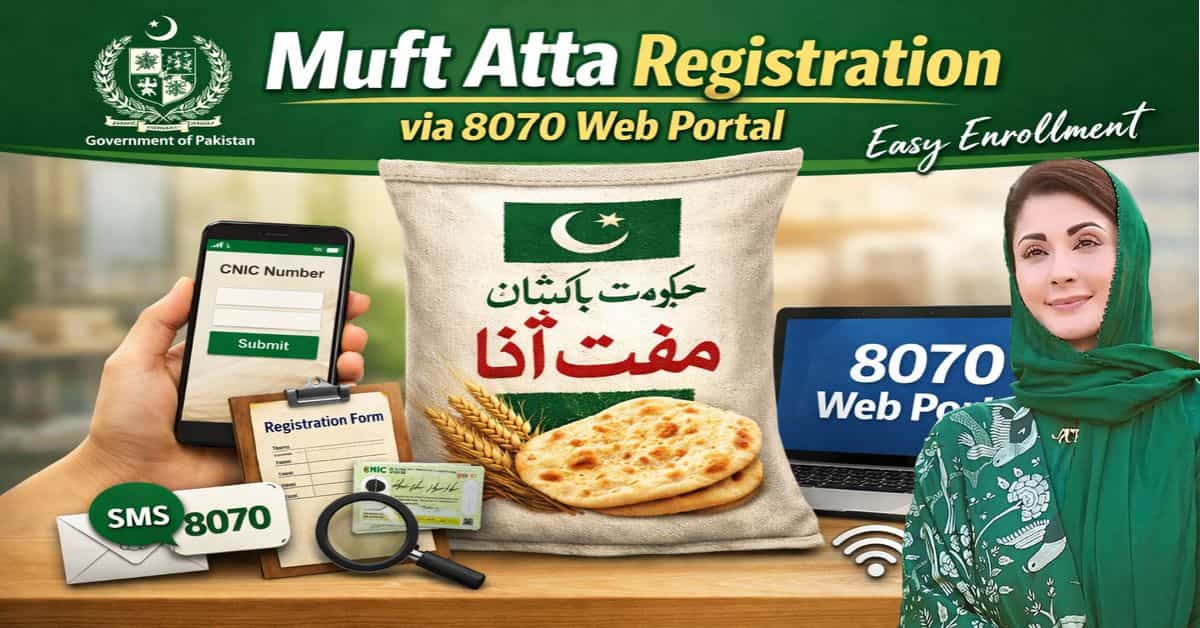
- SMS from 8070 often relates to Ramadan Package registration
- Other official numbers are used for various welfare programs like BISP/Kafaalat
Respond only to official communications and avoid unofficial or third‑party messages.
Summary of Major Relief Programs:
The table below consolidates the main programs referenced in this guide:
| Program | Type of Support | Who It Targets | Typical Registration Method |
|---|---|---|---|
| Nigehban Ramadan | One‑time cash and food support | Low‑income families | SMS with CNIC to designated service number |
| Punjab Rashan Card | Monthly grocery subsidy | Households under income limit | Registration via PSER database |
| Proposed Rs. 45,000 | Under review – potential support | Ultra‑poor (pending criteria) | Not yet active |
Conclusion:
Punjab’s poverty relief efforts in 2026 aim to combine immediate financial support with longer‑term food security and livelihood assistance. Applicants should ensure their socio‑economic data is complete and accurate in the official registry to maximize their chances ofbenefit approval.
Frequently Asked Questions:
Can a family register for multiple relief programs?
Yes. Families meeting the eligibility criteria can apply for more than one program, such as the Nigehban Ramadan Package and the Punjab Rashan Card. Approval for one program does not prevent participation in another.
How will I receive confirmation of my application?
Once your application is verified, you will receive an official SMS from the relevant government number confirming your eligibility and providing instructions for accessing benefits. Avoid responding to messages from unofficial sources.
Is the Rs. 45,000 monthly relief program currently available?
No. The Rs. 45,000 monthly relief is still under proposal and has not been launched. Once implemented, it is expected to target the ultra-poor, typically families with a PMT score of 12 or below, combining cash support and income-generating assistance.