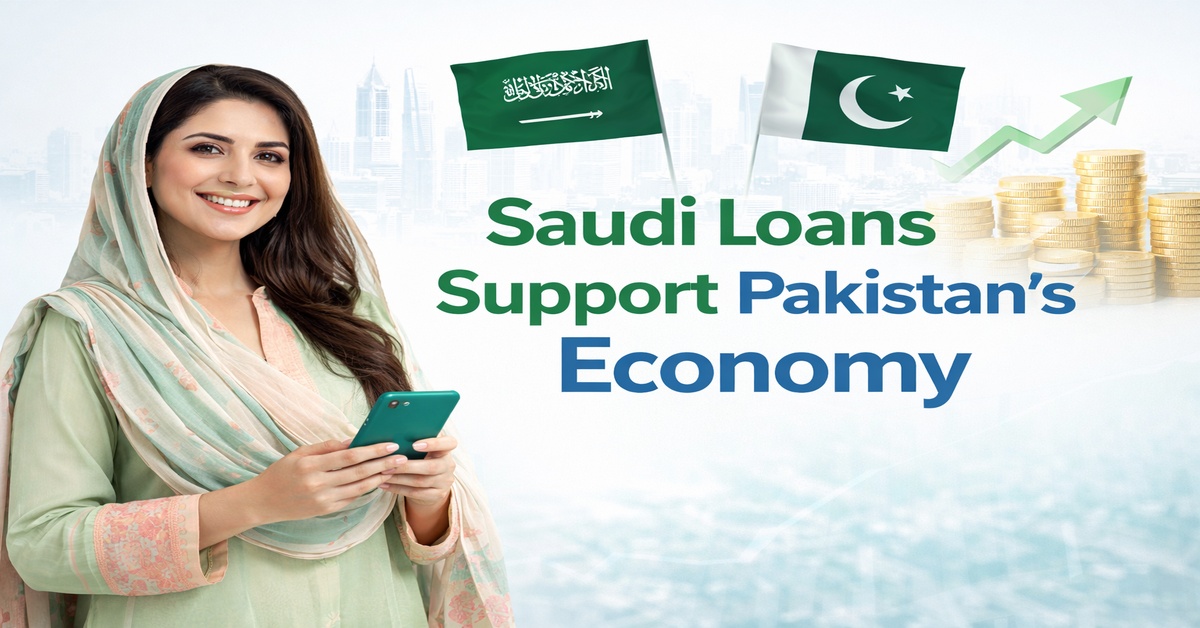
Saudi Loans Support Pakistan’s Economy in 2026 – Pakistan’s economy is facing another challenging period in October 2026, relying heavily on Saudi loans to maintain its foreign reserves and budget stability. These low-interest credit lines, offered at just 4%, have become a financial lifeline, providing Pakistan with critical breathing space amid inflation, currency pressure, and IMF conditions. Let’s examine how these Saudi loans are helping Pakistan remain financially stable this year.
Saudi Loans: A Crucial Financial Lifeline:
Saudi Arabia has emerged as one of Pakistan’s strongest economic partners, providing $5 billion USD in cash deposits that the State Bank of Pakistan (SBP) continues to roll over annually.
Key Highlights:
- Total Saudi Deposits: $5 billion
- Interest Rate: 4% per year (much lower than commercial lending rates)
- Maturity Dates: $2 billion due Dec 2026, $3 billion due Jun 2027
- Arrangement Type: Government-to-Government (Offline)
Saudi Loans Supporting Pakistan’s Economy:
| Program / Facility | Start Date | Maturity / Rollover Date | Loan Value (USD) | Interest Rate | Type of Arrangement |
|---|---|---|---|---|---|
| Saudi Deposit (2B) | 2020–2021 | Dec 2026(Expected Rollover) | $2B | 4% | Government / SBP Offline |
| Saudi Deposit (3B) | Earlier – Renewed Yearly | Jun 2026 (Expected Rollover) | $3B | 4% | Government / SBP Offline |
| Combined Deposits (Saudi + China + UAE) | Various Years | Under IMF Program (3 Years) | ≈ $12B | 4–6% | Bilateral / Government |
| Saudi Oil Facility | Earlier Years | Ongoing | $1.2B | 6% Flat | Oil Financing Deal |
Why Pakistan Relies on Saudi Loans?
1. Maintaining Foreign Reserves
Pakistan’s foreign exchange reserves typically hover around $14–15 billion, much of which comes from friendly nations. Without these deposits, paying for imports, debt servicing, and currency stabilization would be difficult.
2. Meeting IMF Conditions
Under the IMF Extended Fund Facility (EFF), Pakistan must maintain certain levels of foreign deposits from partners like Saudi Arabia, China, and the UAE. These reserves strengthen investor confidence and prevent sudden financing gaps.
3. Building Global Trust
By consistently rolling over deposits, Saudi Arabia demonstrates confidence in Pakistan’s financial reforms, encouraging support from other lenders like China and the UAE.
Why Saudi Loans Are Cheaper — Interest Rate Comparison?
| Source | Interest Rate | Notes |
|---|---|---|
| Saudi Deposits ($5B) | ≈4% | Most affordable facility for Pakistan |
| China / UAE Deposits | ≈6.1–6.5% | Higher borrowing cost |
| Saudi Oil Facility | ≈6% | Flat rate, energy imports |
| Commercial Bank Loans | 7–9% (SOFR + margin) | Short-term and expensive |
How These Loans Work?
- Deposit Agreements: Saudi Arabia deposits USD into Pakistan’s SBP accounts
- Rollover Cycle: Upon maturity, the deposits are extended instead of withdrawn
- Interest Payment: Pakistan pays 4% annual interest
- IMF Monitoring: Transactions are verified to meet IMF program targets
Short-Term Economic Benefits:
- Reserve Stability: Prevents foreign exchange crises and ensures imports
- Debt Servicing Ease: Low interest makes repayments manageable
- Investor Confidence: Signals continued global support
- Currency Support: Stabilizes the Pakistani Rupee
- Inflation Control: Prevents sharp increases in import prices
Long-Term Implications — Beyond 2026:
Advantages:
- Strong partnership with Saudi Arabia
- Access to low-cost financing at 4% interest
- Compliance with IMF conditions
Challenges:
- Dependency risk on a few countries
- Uncertainty over future rollover extensions
- Need for economic reforms in exports, revenue, and energy
- Accumulating debt even at low interest rates
Role of Other Countries — China and UAE:
| Country | Support Type | Estimated Amount | Notes |
|---|---|---|---|
| Saudi Arabia | Cash deposits & oil facility | ≈ $5B + $1.2B Oil Credit | 4–6% interest |
| China | Currency swap + loan rollover | ≈ $5B | Supports FX reserves directly |
| UAE | Cash deposits + short-term credit | ≈ $2B | Helps with imports |
IMF Conditions and the Rollover Game:
IMF’s 2026 program requires Pakistan to:
- Maintain stable foreign deposits until program completion
- Avoid using these funds for routine budget spending
- Increase revenue collection and reduce subsidies
Saudi Arabia’s rollover compliance helps Pakistan stay on track with IMF benchmarks.
How Much Pakistan Saves Due to Saudi Loans?
| Loan Type | Amount (USD) | Interest Rate | Annual Interest Payment |
|---|---|---|---|
| Saudi Deposits | $5B | 4% | $200M / Year |
| Commercial Loans | $5B | 7–8% | $350–400M / Year |
Annual Savings: ≈ $150–200 million
Recommendations for Pakistan:
- Strengthen Exports: Expand industrial and IT sectors
- Diversify Lenders: Seek support from Qatar, Malaysia, Türkiye
- Boost Remittances: Simplify channels for expatriates
- Energy Reforms: Reduce import bills via renewables
- Fiscal Discipline: Cut non-productive spending, increase tax base
October 2026 Update:
- Saudi $2B Deposit: Confirmed rollover till Dec 2026
- $3B Facility: Negotiations for 2026 ongoing
- China Swap Renewal: Expected before IMF review in Dec
- Rupee Exchange Rate: Rs 277–283 per USD
- Inflation Trend: Slight drop to 21% YoY from 24% last quarter
Long-Term Vision — From Survival to Stability:
While Saudi loans provide temporary relief, Pakistan must use this period to strengthen its economic base and reduce dependency.
Key Takeaways:
- Cheap loans provide time for reforms, not a permanent solution
- Investment in exports, education, and energy is critical
- Fiscal discipline can reduce future foreign reliance
Check Also: CM Punjab Launches T Cash Card – Features And Eligibility
Conclusion:
In October 2026, Saudi loans keep Pakistan’s economy afloat by offering low-interest credit and rolling over existing deposits at no extra cost. These funds support foreign reserves, stabilize the rupee, and enhance investor confidence. However, for long-term stability, Pakistan must implement real economic reforms, increase exports, reduce imports, and diversify funding sources.
Frequently Asked Questions:
What are Saudi loans to Pakistan in 2026?
Saudi loans are low-interest deposits and credit facilities provided by Saudi Arabia to support Pakistan’s foreign reserves and budget stability.
How much has Saudi Arabia provided Pakistan?
Saudi Arabia has provided around $5 billion in deposits and $1.2 billion in oil financing, helping stabilize the economy.
Why are Saudi loans important for Pakistan?
They help maintain foreign reserves, stabilize the rupee, meet IMF conditions, and support essential imports like fuel and medicine.