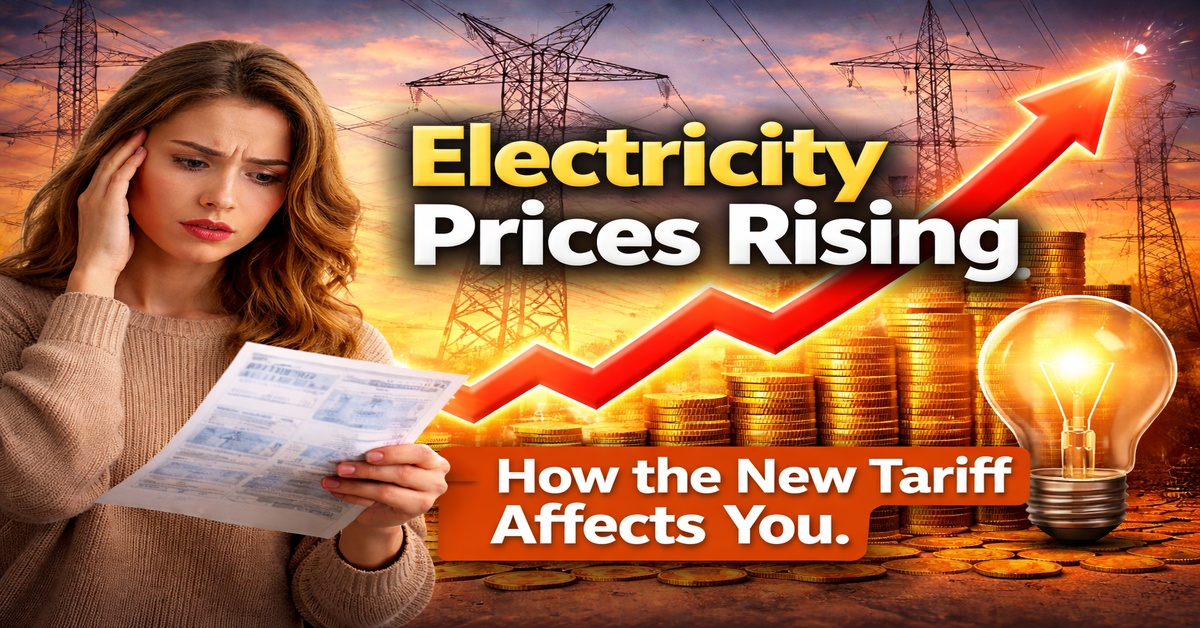
Electricity Prices Rising – How the New Tariff Affects You – Pakistan is experiencing another increase in electricity prices, as the National Electric Power Regulatory Authority (NEPRA) has approved a Rs. 0.50 per unit hike for September 2026. While this increase may appear small, it has a significant impact on households and businesses already struggling with high utility bills. The rise in electricity costs is primarily driven by inflation, global oil price increases, and a depreciating rupee. Let’s examine the reasons behind this price hike, its effects, and ways for consumers to cope with the rising expenses.
Why Are Electricity Prices Rising Again?
On August 15, 2026, NEPRA issued a notification announcing the Rs. 0.50 per unit increase under the Fuel Cost Adjustment (FCA) for September 2026. Several key factors are contributing to this increase:
- Fuel Price Surge: Global oil prices climbed by 5% in July 2026, raising costs for Pakistan’s oil-based power plants.
- IMF Conditions: Pakistan’s economic agreements with the International Monetary Fund (IMF) require implementing debt-recovery surcharges and tariff adjustments, which put further pressure on electricity rates.
- Circular Debt: Pakistan’s circular debt, amounting to Rs. 2.1 trillion, forces NEPRA to revise tariffs periodically to stabilize the energy sector.
- Peak Demand: The high use of air conditioners during the summer months caused a 10% spike in electricity demand, contributing to higher tariffs.
Impact on Households and Businesses:
The Rs. 0.50 per unit increase will affect millions of consumers, particularly those in the middle and lower-income brackets. The effects are visible across Pakistan’s population of 240 million.
For Households:
- A household using 300 units per month will see its electricity bill increase from Rs. 10,350–19,350 to Rs. 10,500–19,500.
- Many families are already struggling to balance their budgets, with 40% reducing consumption to manage costs.
- Households are often forced to cut back on essentials like food and education, and the price hike adds further strain.
For Businesses:
- Small businesses are experiencing increased operating costs, ranging from 3–5%, with sectors like Karachi’s textiles reporting 7% higher costs due to rising electricity prices.
- Rising electricity costs may force some small and medium-sized businesses to reduce staff or scale back production.
Current Electricity Tariff Structure (September 2026):
The tariff structure has been adjusted following the recent price hike:
| Consumption (Units) | Price per Unit (PKR) | After Rs. 0.50 Hike (PKR) |
|---|---|---|
| Up to 50 | 4–8.5 | 4.5–9 |
| 51–100 | 12–14 | 12.5–14.5 |
| 101–300 | 16–18 | 16.5–18.5 |
| 301–700 | 24–30 | 24.5–30.5 |
| Above 700 | 38–62 | 38.5–62.5 |
Tips to Manage Rising Electricity Costs:
As electricity prices rise, it is crucial for consumers to take proactive measures to manage usage and reduce bills:
- Monitor Usage: Regularly check your meter to stay within lower consumption slabs (under 200 units). This could save Rs. 2,000–3,000 monthly.
- Switch to Solar: Investing in a 5kW solar system (approx. Rs. 600,000) can reduce electricity bills by up to 80%. Falling solar panel prices make this a viable long-term option.
- Avoid Peak Hours: Electricity rates are highest during peak hours (12 AM to 5 AM). Using appliances like air conditioners during off-peak times can help avoid high Rs. 41–48 per unit charges.
- Energy Efficiency: Replace old bulbs with LED lighting, which uses 50% less electricity. Unplug unused devices to prevent waste.
- Report Scams: Verify any relief schemes or assistance programs through the official NEPRA website or call 118 for accurate information.
Check Also: Gold Rate Decrease in Pakistan – Latest Updates
What’s Next?
Although the Rs. 0.50 per unit increase is relatively small, it adds to the cumulative strain of Pakistan’s ongoing energy crisis. With over 65% of consumers expressing frustration over rising costs, the need for long-term solutions is urgent. The government must implement measures to ease the financial burden on consumers and reduce dependence on imported fuel.
Conclusion:
As electricity tariffs continue to rise, it is vital for consumers to actively manage energy usage. By adopting energy-saving practices and considering alternative energy sources like solar power, households and businesses can reduce the impact of these hikes. However, addressing the root causes—such as fuel price surges, circular debt, and IMF conditions—is necessary to provide lasting relief.
Frequently Asked Questions:
Why are electricity prices rising in Pakistan?
Electricity prices are rising due to fuel price surges, IMF conditions, circular debt, and peak summer demand.
How much will my monthly bill increase?
For a household consuming 300 units, bills may increase by Rs. 150–200 per month.
Can solar energy help reduce electricity costs?
Yes, a 5kW solar system can cut bills by up to 80%, making it a cost-effective alternative.